The Liquidity Desert Between Chicago's Closes: An Overnight Session Survival Guide

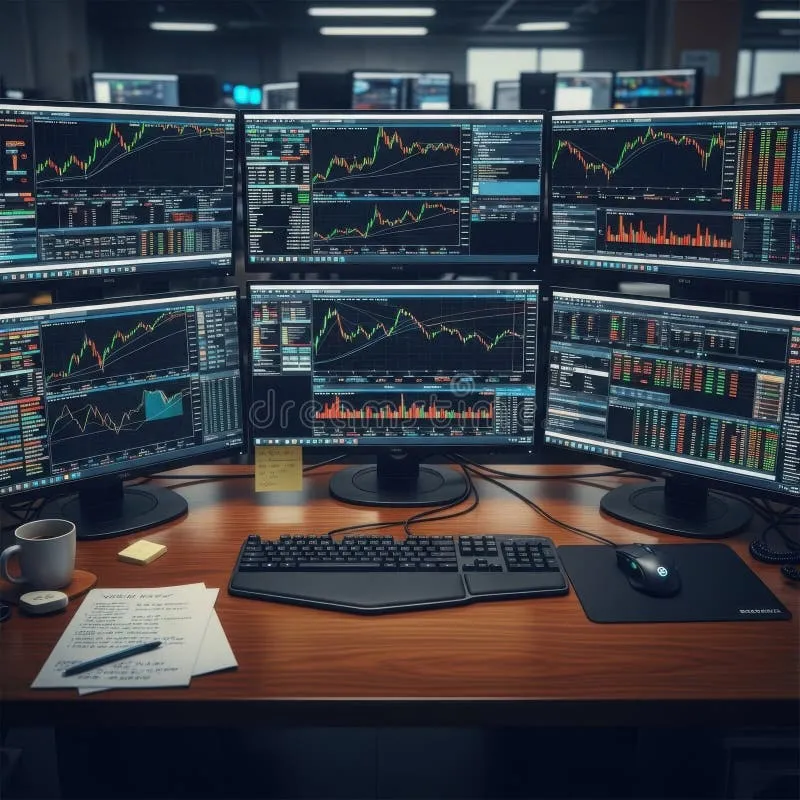
Photo: empty trading desk at night multiple monitors dark room, via thumbs.dreamstime.com
There's a particular silence on a trading desk at 2:30 a.m. Central. The equity index futures book on Globex still ticks, but the depth behind it has thinned to a fraction of what the RTH crowd sees. A 10-lot that would clear in the daytime without a whisper of slippage suddenly walks the market two ticks. For traders who've only ever worked the regular session, the overnight can feel like a different instrument wearing the same ticker.
It isn't a different instrument. It's the same instrument with different plumbing — and the plumbing is what kills accounts.
Where the Liquidity Actually Goes
Ask overnight regulars where volume lives between roughly 9 p.m. and 6 a.m. ET and you'll get a consistent answer: it concentrates in the front month, in the front two hours around the Asian open, and around European headlines. The rest is a desert with occasional oases.
A desk trader we'll call M., who has run an overnight S&P book out of a Chicago suburb for nine years, describes it bluntly: "Between 2 and 4 a.m. my time, I'm trading against algorithms, a handful of insomniacs, and whoever in Tokyo just got a data print. The book lies. What looks like support on a chart might be three resting orders. Take them out and there's nothing underneath."
That's the core mechanical difference. Daytime depth is a crowd; overnight depth is a queue. Queues evaporate.
Gap Risk on Foreign News
The overnight session is when the rest of the world does its governing. A Bank of Japan intervention, a surprise PBOC liquidity operation, an escalation in Eastern Europe — these land on a book that has no capacity to absorb them. The daytime market reprices headlines in seconds across thousands of contracts. The overnight market gaps.
The practical consequence: stop placement behaves differently. A 30-tick stop on an E-mini at 3 a.m. is not a 30-tick risk. It's a 30-tick risk in a liquid market and a 60- or 80-tick risk when the fill comes through an air pocket. M. sizes overnight positions at roughly half his daytime exposure, and he's not being conservative for its own sake — he's compensating for fills he cannot control.
Crude and the energies deserve special mention. Overnight inventory reports, OPEC chatter, and geopolitical headlines routinely produce moves that would be front-page news during RTH but barely register on daytime traders' radars because they happened while America slept. The damage, of course, is fully visible by the 9:30 open.
Margin Mechanics After Hours
Here's the part most retail resources skip entirely: your broker's margin treatment can change when you're not watching.
- Initial vs. maintenance in practice. Regulated minimums are set by the exchange, but brokers apply house add-ons, and some apply stricter overnight thresholds or reserve the right to liquidate more aggressively in thin conditions. Read your broker's overnight policy before you trade the session, not after the first margin call.
- Liquidation in a thin book. A forced liquidation at 3 a.m. doesn't get the benefit of deep two-sided markets. Brokers know this, and their risk desks get nervous when accounts sit at elevated margin utilization with no liquidity to exit into. Expect earlier, not later, intervention.
- Spread margin doesn't always carry overnight. Certain intraday margin programs and reduced day-trading rates expire at the session close. Traders who hold a day-traded position into the overnight can find themselves margin-called on a position they thought was margined at a fraction of the cost.
One veteran of the grain overnight shift put it this way: "The exchange sets a floor. Your broker sets the real rules. And at 2 a.m., the real rules get stricter."
The Overnight Risk Checklist
For traders who insist on working the session, the collective's overnight regulars converge on a short list:
- Halve your size. At minimum. Thin books mean your risk per contract is not the risk you're used to.
- Know the calendar. BOJ decisions, Chinese PMI prints, European CPI — mark them in your own time zone and decide beforehand whether you want to be flat into them.
- Use limit orders for entries, market orders only for exits. Paying the spread to get in is a donation; paying it to get out is insurance.
- Set alerts on margin utilization, not just price. Know your account's distance from maintenance in ticks, not percentages.
- Assume stops are advisory overnight. Size so that a two-times-slippage fill is survivable.
- Check whether your broker's day margin expires at the close. It usually does.
- Have a hard flat time. The traders who survive the session decide in advance when they stop, because fatigue plus thin liquidity is how small losses become account-ending ones.
The Session Isn't Going Anywhere
Roughly three-quarters of E-mini volume may print during daytime hours, but the overnight session is where global risk gets priced in real time, and the traders who work it professionally treat it as a specialty, not a convenience. The tools are the same. The market is not.
Respect the desert, carry half the water, and know where the oases are before you're thirsty.