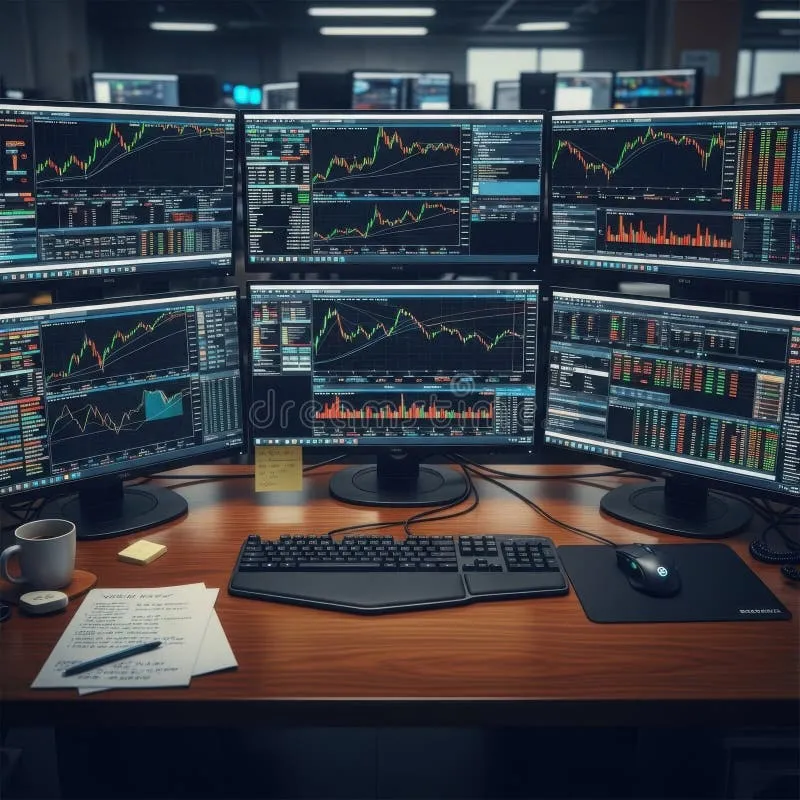
When Chicago Sleeps: Reading the Grain Basket's Overnight Order Flow
Photo: Patricia DuBose Duncan, Public domain, via Wikimedia Commons
Ask a room full of grain futures traders how they trade the overnight session and most will tell you they don't. They manage day-session risk, flatten before the close, and let the electronic hours sort out whatever South America or the export desk throws at the market. That convention made sense when the overnight session was a thin afterthought. It makes less sense now.
The Session Is Not a Smaller Version of the Day
The most common error traders make when approaching the overnight grain session is treating it as a low-activity replica of the day session. The volume profile tells a different story. Where the day session in ZC and ZS prints a broad, bell-shaped distribution centered around the U.S. cash and CME floor hours, the overnight session builds a flatter, multi-node profile with distinct participation clusters.
The first cluster arrives with the open of the session at 7:00 p.m. Central, as end-of-day hedging decisions from elevators and commercial desks get worked through. The second builds through the Asian morning, driven largely by Chinese crush margins and palm oil spillover into the soy complex. The third — and by far the most consequential — hits in the hours before the 8:30 a.m. ET USDA window, when European desks and early U.S. algorithmic participation begin positioning ahead of the export sales report or WASDE release.
Each of these clusters has a different character. The 7:00 p.m. cluster tends to mean-revert; the pre-report cluster trends. A trader who applies one playbook to all of them is trading blind.
Who Is Actually in the Market
Overnight order flow in grains is dominated by three participant groups: commercial hedgers rolling risk from the day session, Asian Crushers and importers acting on physical demand signals, and a steadily growing contingent of systematic funds whose overnight algorithms respond to currency, energy, and meal/oil spread signals rather than to U.S. session dynamics.
The practical implication is that overnight price discovery is driven less by speculative conviction and more by genuine transfer of risk. When soybeans move 12 cents at 2:00 a.m. Central on a Chinese purchase confirmation, that move reflects real business. Day-session traders who dismiss such moves as "thin tape noise" are ignoring information that the opening call will partially — but never fully — reflect.
Setup One: The Export Confirmation Fade-and-Go
Export sales data drops Thursday mornings at 8:30 a.m. ET, but the physical business that precedes it often leaks into the overnight session. Flash reports of large soybean purchases by unknown destinations or confirmed Chinese buying frequently hit the wires between 8:00 p.m. and midnight Central.
The setup: on a confirmed purchase headline, the initial overnight spike tends to overshoot, particularly in the front month where overnight depth is shallow. Rather than chasing the spike, wait for the first 15-minute bar to complete and look for a retest of the breakout level. If the retest holds with contracting volume, the move has sponsorship and continuation into the day session is the higher-probability path. If the retest fails, the headline was already priced or the purchase was rolled forward — fade back toward the prior value area.
Setup Two: The South American Weather Trend Day
Overnight sessions during the Brazilian safrinha planting and filling windows behave differently. When Argentine or Brazilian forecast models update — typically late U.S. afternoon, flowing into the overnight tape — the corn and soybean markets can establish a directional bias hours before a U.S. trader wakes up.
The approach here is not to predict weather; it is to recognize that when the overnight session breaks out of the prior day-session value area on model-driven flow, the day session tends to open with a gap that holds or extends rather than fills. A practical rule: if the overnight session has traded outside the prior day's value area for more than two hours and volume is building rather than decaying into the European open, position for gap-and-go rather than gap-fill at the 8:30 open.
Setup Three: The Pre-USDA Overnight Range Break
The hours between midnight and 6:00 a.m. Central before a major USDA report often produce a quiet compression — a tightening range as desks reduce exposure. The trade is the failure of that compression: a break of the overnight range in the final ninety minutes before the report, on a volume uptick, frequently signals the direction the commercial community is positioning. This is a pre-positioning signal, not the trade itself — size accordingly and respect the report risk.
The Honest Caveats
Overnight grain trading is not free money for staying awake. Margins are the same, but liquidity is a fraction of the day session, and slippage on stops in the front month during the 2:00–4:00 a.m. Central lull can be punishing. Position size should be cut to a third or quarter of day-session normal. And the biggest edge — reading export and weather flow — accrues to traders who actually track the underlying physical market, not just the chart.
But the structural point stands: a meaningful share of grain price discovery now happens while most U.S. retail traders are asleep. Ignoring it means starting every day session at an informational deficit. The playbook is different. That is precisely why it persists.