A Snapshot Is Not a Signal: Five COT Misreads That Cost Futures Traders

The CFTC Commitments of Traders report occupies an odd place on a futures trader’s desk. It is free, standardized, and widely quoted, yet it arrives as a weekly snapshot of positions that were already in place days earlier. For active derivatives traders, that combination can be dangerous. The report is useful for framing the market’s prior state, but it is poorly suited to the job many traders assign it: predicting the next move.
At Futures Working Group, we treat COT data as part of the execution backdrop, not as a trigger. The distinction matters because positioning data can inform crowding, hedging pressure, and open-interest context, but it cannot tell you when to lift an offer or hit a bid. Below are five common misreads we see in discretionary futures workflows, along with the practical corrections that belong in a trading plan.
Misread One: Commercials Are Not a Directional Conscience
The commercial category is often read as the smart money. That interpretation is too simple. Commercial positions frequently reflect hedging, inventory management, basis considerations, and roll timing. A producer selling futures may be locking in margin rather than expressing a bearish view on the next ten sessions. A swap dealer’s position may be driven by client flow and risk warehousing, not by a forecast of the outright price.
This does not make commercial activity irrelevant. It makes it contextual. Large commercial length or shortness can signal where hedging demand is concentrated, and changes in that demand can matter around delivery periods, crop cycles, and energy inventory reports. But a trader who buys simply because commercials are net long is mistaking a business hedge for a directional conviction. The better use is to ask what the hedge implies about physical market conditions and whether that pressure is likely to persist into the next report.
Misread Two: The Calendar Is Longer Than the Tape
The report is compiled as of Tuesday’s close and released on Friday afternoon. By the time most traders read it, the market has absorbed three more sessions, including any midweek macro event, inventory release, or headline-driven repricing. In holiday weeks, the gap can feel even wider because liquidity and participation are uneven.
That lag does not invalidate the data, but it changes its role. COT is a rearview mirror. It can tell you how the market was positioned before a move, which is useful for judging whether a rally or selloff was fueled by fresh risk or by short covering. It cannot tell you whether the next session will extend that move. Treat the release as a regime update, not an entry signal. If price has already broken out before the report lands, the report may explain the fuel but not the next ignition.
Misread Three: Aggregation Hides the Contract That Matters
Futures traders often aggregate related markets for convenience. Energy contracts, Treasury maturities, and equity index products can be lumped together into a single positioning view. That can be misleading. The CFTC report is organized by contract market, and the relevant category mix can differ sharply between neighboring products. A position in one Treasury maturity does not carry the same duration or delivery profile as another. A crude oil position is not interchangeable with refined products.
Aggregation also blurs the difference between futures-only and combined futures-and-options reporting. If a trader sums categories without checking the contract specification, expiration mix, and report type, the resulting number may look clean but say little about the actual exposure that will trade in the next session. Our rule is simple: read the contract you execute. Use cross-market comparisons only after each leg has been inspected on its own terms.
Misread Four: Open Interest Is the Denominator
Raw contract counts are not positioning signals. A managed-money long of 40,000 contracts means one thing in a market with 300,000 open contracts and something very different in a market with 1.5 million. Open interest provides the denominator. Changes in open interest provide the context. Rising open interest alongside rising price may suggest new risk being added; rising price with falling open interest may suggest short covering or position exit.
The same discipline applies to reportable versus nonreportable categories. A large reportable position can coexist with a deep nonreportable pool, and the balance between them can shift around roll periods and macro events. Traders should normalize positioning by open interest, compare changes over several weeks, and check concentration. A single week’s headline number without that context is more likely to create false confidence than an execution edge.
Misread Five: Spreads Are Not Outrights
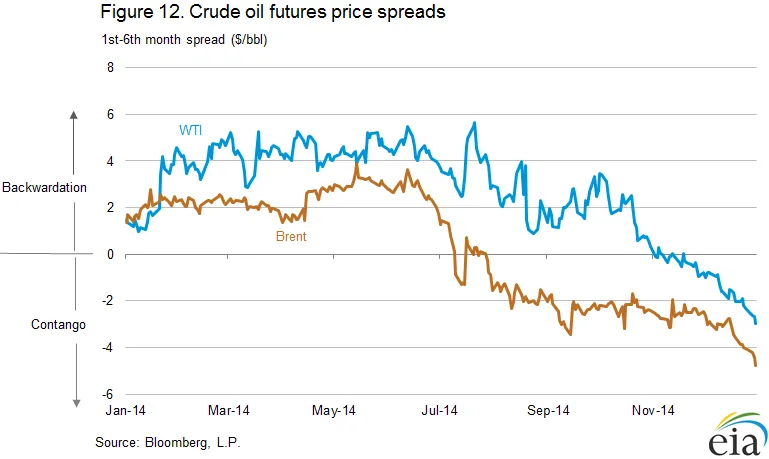
Spread positions are a frequent source of confusion. A trader may see a modest net outright position and conclude that the market is not crowded, while a larger spread book sits alongside it. In Treasury, energy, and agricultural markets, spread positioning can dominate certain reporting categories and can distort a naive net reading. Calendar spreads, intercommodity spreads, and options-related hedging may all appear in the data without representing a clean directional bet.
For execution purposes, the question is not only what the net number is, but what kind of risk it represents. A spread position may be exposed to curve moves, roll risk, and margin changes that an outright trader does not face. Treat spread categories as a separate lens. Do not collapse them into an outright view unless you understand the legs, the expiry map, and the liquidity conditions around the roll.
Using COT as a Backdrop, Not a Trigger
The practical correction is procedural. First, note the report date and release time, and mark the data as stale by the time you act. Second, read the correct contract market and report type. Third, normalize positions by open interest and compare them with a multi-week range. Fourth, separate outright from spread exposure. Fifth, pair the positioning read with price, curve, volatility, and liquidity conditions. Only then does the data belong in a trade decision.
COT can help a futures trader understand crowding, hedging pressure, and the potential for forced flows. It cannot replace execution discipline. The report is a rearview mirror, and rearview mirrors are useful precisely because they are not windshields. Use it to understand where the market has been, then let the live tape and your risk limits decide what happens next.